
Sustainability
Climate protection through a regional circular economy — and responsibility for the soil, water and biological diversity of the Brazilian interior.
Sustainability is the operating logic, not the label
At Monte Alto, sustainability is not a promise added after the fact, but the way the plant itself works. Organic residues that would otherwise decay unused and release methane in the process are turned into biomethane as a renewable energy carrier and biofertilizer for regional agriculture. Economic and ecological benefits arise from the same process — one is not the price paid for the other.
Four fields of impact
Climate protection
Biomethane replaces fossil energy carriers (natural gas, diesel) and thereby avoids CO2. At the same time, methane that would escape from openly stored residues — a greenhouse gas many times more potent than CO2 — is captured in a controlled way and used for energy instead of being released into the atmosphere.
Circular economy
Residues from agriculture and agro-industry are turned into energy and nutrients. The digestate returns to the fields as biofertilizer and replaces imported mineral fertilizer — the nutrient cycle closes locally instead of ending as waste.
Soil and water
Biofertilizer returns organic matter to the soils and strengthens their fertility. The controlled use of residues such as vinasse reduces the risks that uncontrolled application poses to soils and water bodies.
Biological diversity
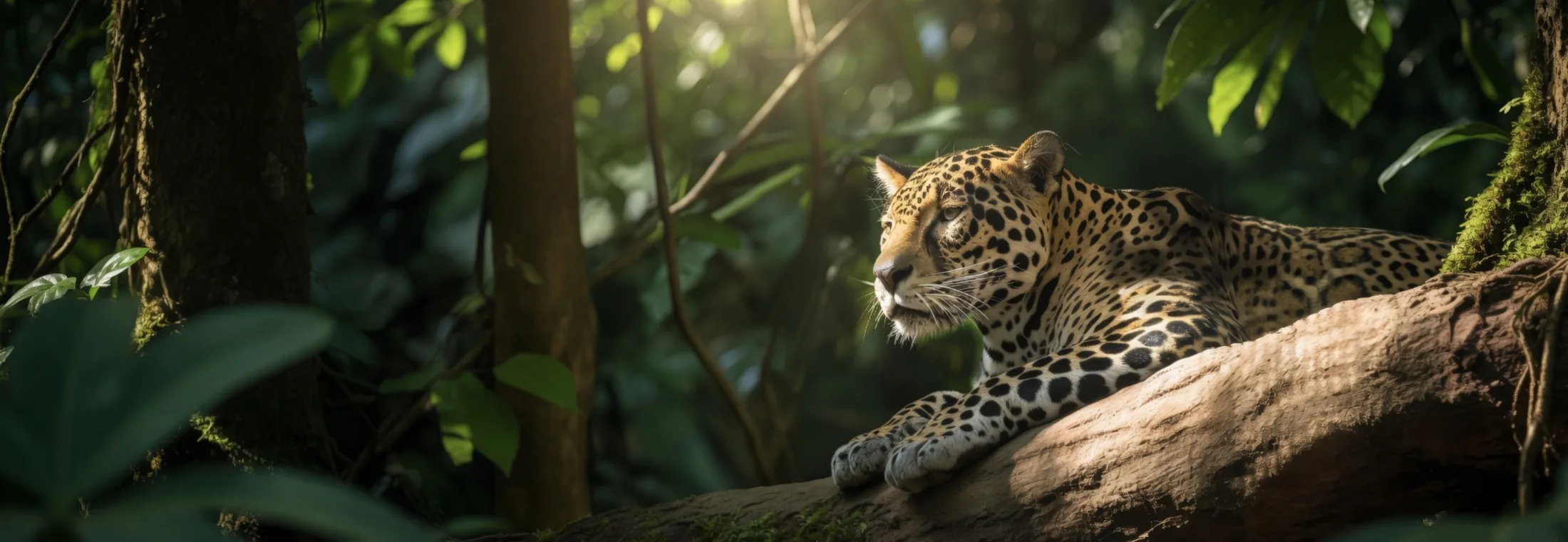
The onca-pintada (jaguar) stands as an emblem of Brazil's biological diversity. Monte Alto is not a conservation project — but a form of value creation that reduces fossil dependency and pollutant inputs and shapes land use in the spirit of a circular bioeconomy.
Embedded in Brazil’s decarbonization strategy
The project is part of the national framework for renewable gases — the Lei dos Combustíveis do Futuro (Lei 14.993/2024) and the Programa Nacional do Biometano (PNBB). An optional link to RenovaBio with CBIO certificates makes the avoided emissions tradable and verifiable.
How this benefit is distributed in concrete terms locally is shown on the For the Region page; the technical implementation is described in The Project.